

Better safe than sorry!
There’s a serious danger that could shut down your website, etsy shop, social media and laser business as a whole. And surprisingly, it’s more than just using intellectual property in your designs. You could be making designs that are illegal to sell and have no idea.
Before you get slammed with warnings of a lawsuit, let’s go over everything you need to know to avoid getting sued. It might even be what you need to hear to launch some massive growth in your laser business! Let’s dive in!
➕ Subscribe to my YouTube Channel HERE!
This video is sponsored by Kittl. More on them in a moment.
Avoid Intellectual Property (IP) in Designs
To start, let’s tackle the obvious. Intellectual properties (IP) are flipping risky, and yet they are widely used in crafting. I’ve done it and honestly still do. I love being inspired by things I connect with, like They Live, Dr Who, X-Men!
And there’s so much misinformation out there when it comes to these things. You’ve probably heard that if you change a design by 30% you can’t get sued. FALSE.
A Copyright protects artwork, and a Trademark protects brands, names, and slogans.
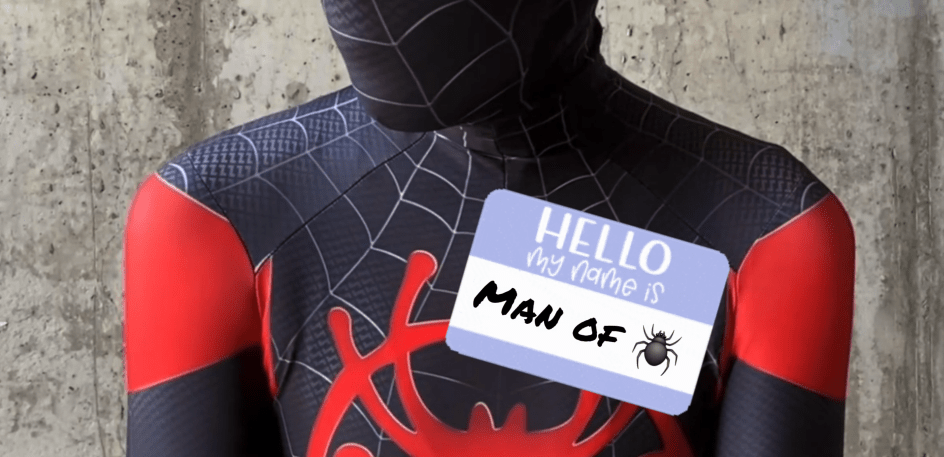
The look of Spiderman is copyrighted and Nike’s “Just Do It” is Trademarked. Copying either will likely get a listing taken down. You could have a design that is super obvious but call it something like “Man of Spiders” to try to not get found out, but with AI image search and other natural internet advancements, you’re just delaying the inevitable.
IP’s are easy to sell because they are known. They already have a connection with fans, so of course we want to make what sells! But it’s illegal, so what do we do?
Well obviously, we can create everything from scratch. The safest and only 100% legal method is to be the original creator of the design, artwork, or phrase. This establishes you as the first copyright owner.
Trademark Check
You could run a quick trademark check. Before using any phrase, word, or slogan for a product you sell, search the USPTO (U.S. Patent and Trademark Office) database. If the phrase is actively trademarked for use on goods/services similar to yours, do not use it commercially.

It can surprise you! Back when I had a vinyl cutter, I made baby clothes. First thing, the word “onesie” is trademarked and can’t be used in listings. So, you have to use words like baby romper instead. And when I put this quote from the Labyrinth on one for sale it got taken down because it turns out someone had trademarked the phrase “Babe with the Power” specifically on clothing.
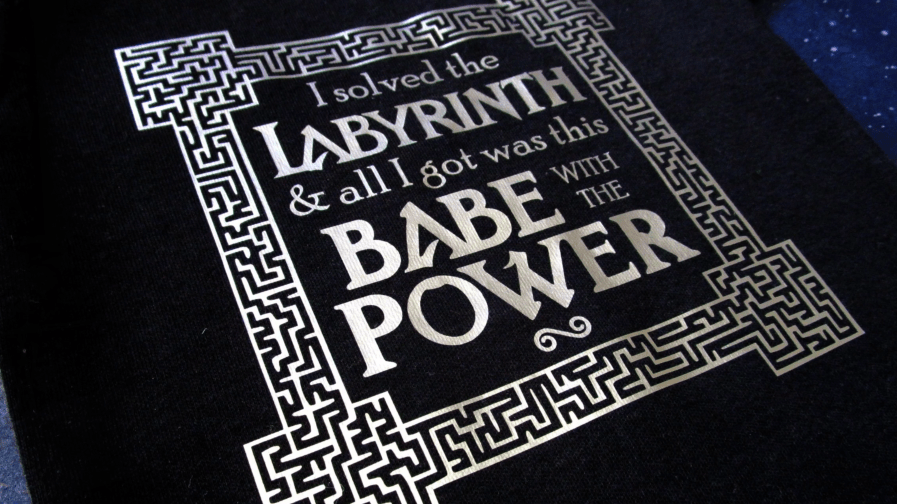
So, the very same design might be ok on a bottle, so long as no one trademarked that phrase on drinkware.
Public Domain
You can find a lot of great recognizable images in the Public Domain, which is a collection of creative works that aren’t protected by a copyright and are free for anyone to use.
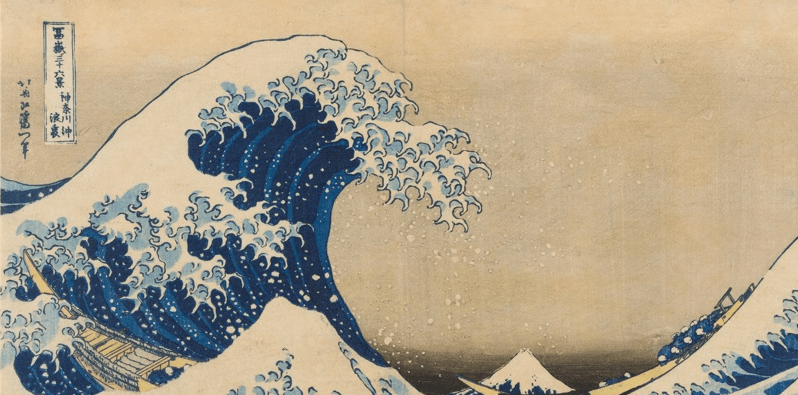
Works enter the public domain when their copyright expires or the author dedicates them to the public, or they never copyrighted it in the first place. This actually is what happened with Little Shop of Horrors. The creator did not believe that The Little Shop of Horrors was going to make any money after the theatrical run, so he didn’t bother to copyright it. Whoops.

Fair use
People sometimes try to claim “fair use” when using IP, especially from film. Don’t rely on the “Fair Use” defense for commercial sales. Fair Use is primarily for commentary, criticism, news reporting, or education—not for making money on a physical product. If you want to start an “everything wrong with” movie review Youtube channel, you’ll probably be ok with fair use. (ding)
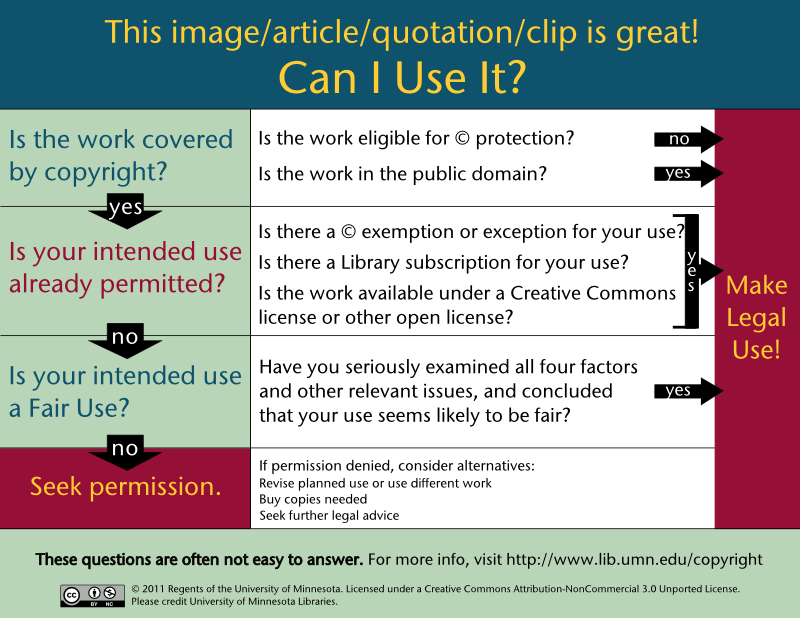
I could go on for days about what to do and what not to do when it comes to using IP in your designs. When in doubt, don’t sell it online. And if you do, when the lawyers get etsy or wherever to take your listing down, don’t put it back up.
Websites That Restrict Commercial Use/Reselling
The danger here is Licensing. When you download a design, you are purchasing a license to use it, not the ownership of the design itself.
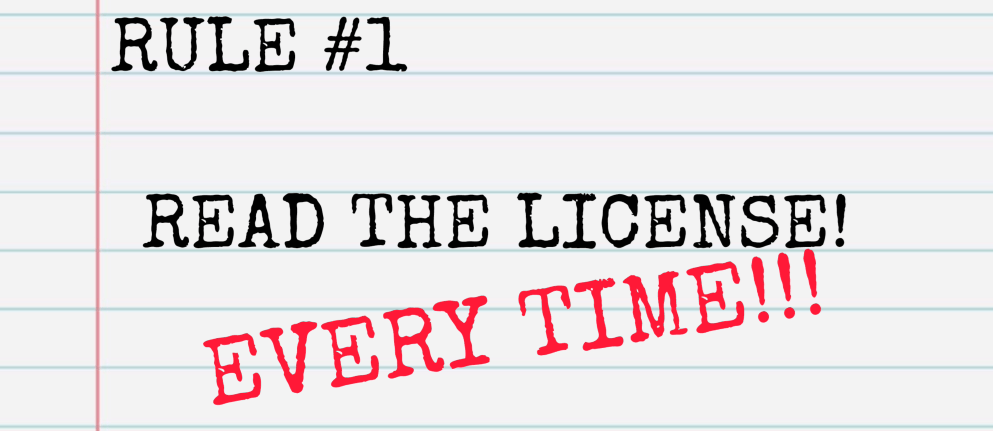
The #1 Rule: Read the License (Every Time). Every file you download comes with a license agreement (Etsy sellers, design sites, font sites). If it says “Personal Use Only,” you cannot sell the finished product.
Some elements on sites like Canva or Adobe Express are licensed for one-time use or non-commercial projects, even in their paid tiers. Always check the specific asset’s source info.
For the website Kittl, their licensing allows for commercial use depending on your plan. With free plan users need to give credit to Kittl, while Pro and Expert plan users have full commercial rights without needing to credit. All users can sell physical products like t-shirts and mugs without a quantity limit but reselling the raw Kittl content as stock material is prohibited. But, if you make your own image like we did with my logo earlier or your own AI prompted images, you can sell those files.
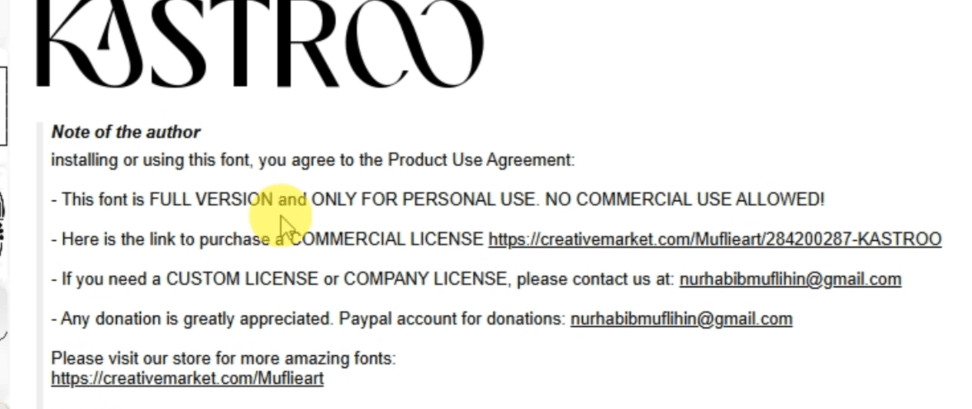
Free Font Websites is a common trap. Many beautiful fonts downloaded from sites like Dafont or 1001 Free Fonts are labeled “Free for Personal Use.” You MUST purchase a separate Commercial License from the font designer to use that font on products you sell. Font companies are known for aggressively pursuing infringement.
Even with a Commercial License, you generally cannot sell the design as a digital file, a component, a stencil, or a mold. You must sell it as a finished, physical end-product.
So, always-always-always read the licensing agreements.
Next Steps
When in doubt, don’t use it. The money you save by not paying for a license is never worth a $30,000 fine and the closure of your business.
It can be hard coming up with design ideas, especially design ideas that sell. It gets easier and easier to come up with ideas when you know what kind of a niche you are in.
Find out if you are too deep into a niche or just barely floating on the surface in this article next.
Happy Crafting!
 Learn with Laser Lady
Leave a comment